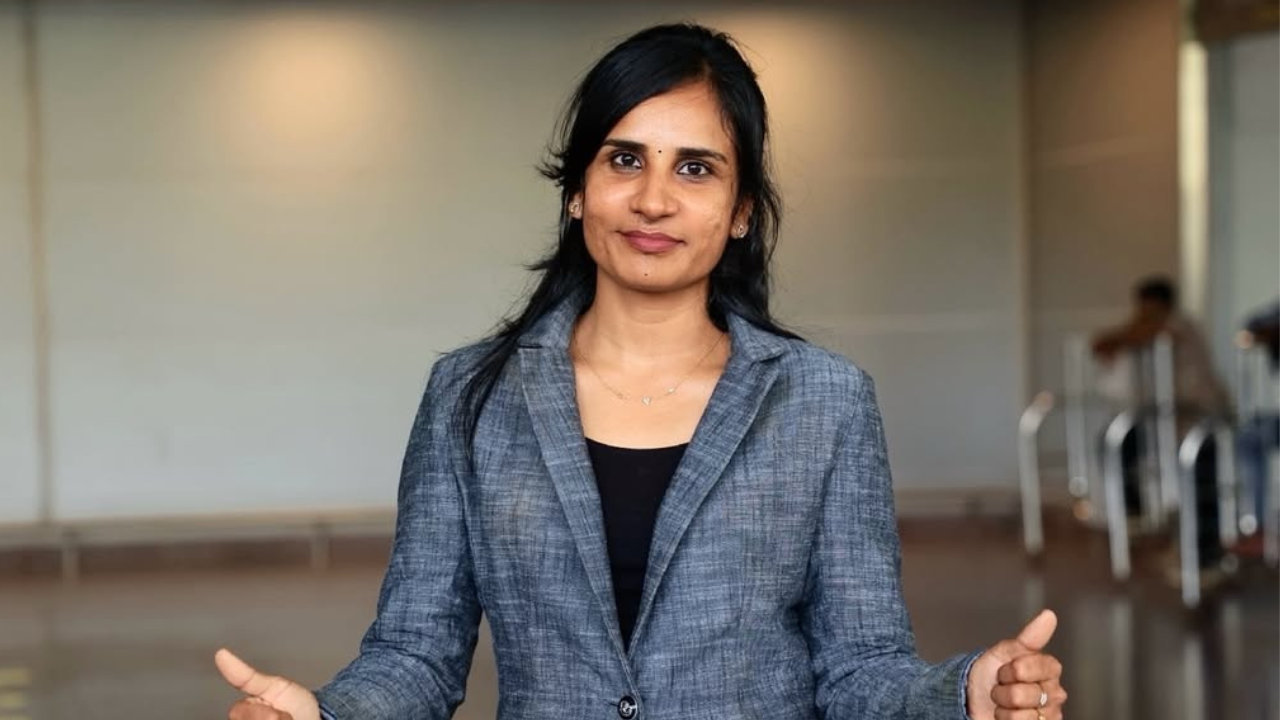

Swetha Rajasekaran grew up watching four generations of women in her family string beads together. In Tamil Nadu’s Narikuravar community, needlework and bead-craft aren’t formal hobbies or luxury trades; they are instinctive, handed down from great-grandmother to mother to daughter before a child even learns to read.
Yet the craft never bought comfort. For decades, the community’s women hawked these necklaces on cracked bus stand pavements, dusty roadside edges, and crowded temple fairs. Hours of meticulous finger work were bartered away for ₹50 or ₹100 just to put rice on the table that evening. In reality, their labour amounted to barely ₹6 per hour. Worse than the poverty was the frequent street harassment, police evictions, and the sheer humiliation of begging customers for a fair price.
A Childhood Lost
The deepest toll fell on the children. Because street vending depends entirely on ground sales and festive seasons. Families lived out of temporary shelters, packing up every few months to chase gatherings across state lines.
Each sudden migration meant pulling boys and girls out of the village school. A week away turned into a month, gaps widened, and eventually, the children dropped out of school. Swetha watched this cycle repeat around her daily: poverty forcing travel, travel killing education, and lack of schooling guaranteeing that the next generation would inherit the exact same bead box and roadside sales-dependent lifestyle.
Looking ahead: The Traditional Model
Swetha broke the pattern early by earning her engineering degree. But after getting married and raising three small kids, the reality of her people never left the back of her mind. She partnered volunteering with an NGO run by her father, where she noticed a pattern: donations and one-off welfare gifts offered temporary relief, but they ran out the minute donors looked away. Real dignity needed self-sustaining cash flow.
The real spark ignited when her father teamed up with an American nonprofit called NEST to test Narikuravar beadwork in foreign export markets. Overseas buyers didn’t see cheap roadside ornaments; they saw passionate craft, slow-crafted beauty. That single experiment proved what Swetha had always believed: the women didn’t lack talent. They lacked a direct bridge to customers who respected handmade art.
Turning Street Crafts into Auroville Style Crafts
Determined to cut out middlemen and ditch the street hustle entirely, Swetha and her husband founded Ladi Handicrafts. The vision wasn’t to turn the craft into a manufacturing machine, but to bring traditional tribal skills into the high-fashion world.
Working alongside professional design mentors and handicraft federations, Ladi ran hands-on workshops with village artisans. They didn’t change the core identity of the beads; they modernised the designs, introduced contemporary styles, and taught proportion matching tailored to modern shoppers. The results spoke for themselves. Instead of selling pieces at survival rates, Ladi launched finished collections selling for ₹1,000 to ₹2,000 across boutiques, online storefronts, and craft markets in Kerala and West Bengal.
From Daily Wage Labour to Company Partners
Where most corporate brands treat rural makers as casual labour, Swetha chose an entirely different structure. She refused to keep the women as piece-rate workers. At Ladi, the artisans are recognised as business partners and hold genuine equity in the firm.
The pay structure saw an immediate overhaul. Earnings jumped from ₹6 per hour to ₹45 per hour, assuring regular makers a monthly pay of roughly ₹7,000.
Pushing Past Startup Rejection
Building the enterprise was not as smooth. Swetha had to go out of her comfort zone, constantly oscillating between nursing infants, managing home duties, and running back and forth to government offices and raw material vendors. Money was always tight, and investors were hesitant about a tribal-led handicraft startup.
The biggest gut punch landed when Ladi made it to the final interview stage for a Tamil Nadu state startup grant—only to be outright rejected.
A lot of founders would have folded there, but Swetha dug in. Encouraged by sympathetic officers inside the state’s Tribal Welfare Department, the team spent the next twenty-four months patching their weaknesses. They built clear supply chain tracking, overhauled inventory software, and formalised their accounts. When they reapplied within a year, the committee approved the grant without hesitation, clearing the path to formally register Ladi Handicrafts as a private limited company.
Today, Ladi Handicrafts transforms traditional Narikuravar beadwork into a sustainable, market-oriented enterprise. What began as an unstructured livelihood has evolved through Self-Help Groups (SHGs) and a Special Purpose Vehicle (SPV) into a community-led private limited company, backed by StartupTN’s SC/ST-focused funding initiative.
The enterprise directly empowers tribal artisans by creating dignified livelihoods, strengthening traditional craftsmanship, and bridging them with wider commercial markets. Supported by strategic investments and institutional partnerships, Ladi is scaling up to expand its artisan network, enhance production capacity, generate steady local employment, and enter national and international retail markets—building an enduring, self-reliant future for the community.
One Bead at a Time
By last financial year, Ladi clocked a turnover of ₹1.18 crore, proving beyond doubt that a grassroots, artisan-first enterprise can turn a serious profit in modern retail.
Yet for Swetha, balance sheets and top-line growth remain just the backdrop. Her real benchmark is how many women she can bring off the roadside curb. With plans already rolling to bring 50 to 100 more tribal makers into steady, dignified employment, Ladi is proving that when an ancient craft is treated with respect, an entire community can finally stand on its own two feet.