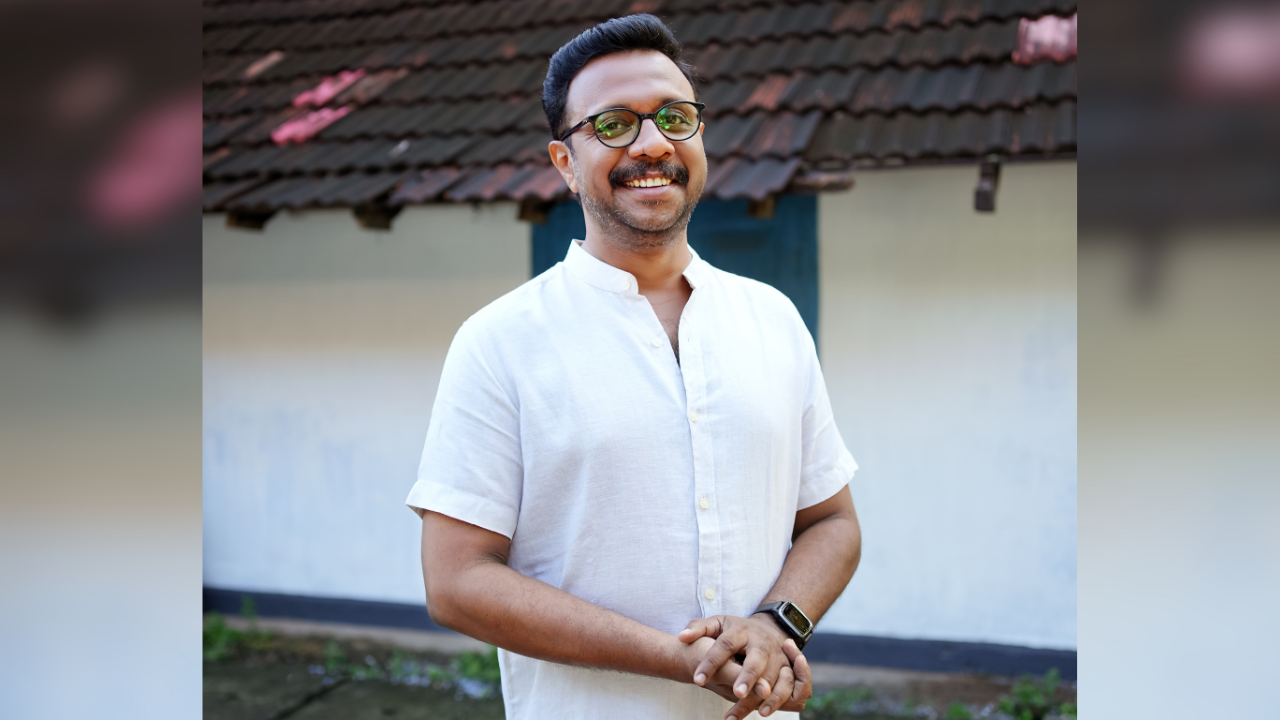

On a typical weekday Hiteshkumar Patel’s life is centred around carrying out structural calculations, making site inspections, and dealing with public works. In his capacity as an Assistant Engineer with the Roads and Buildings Department of the Government of Gujarat, his daily activities revolve around steel, asphalt, and a sense of civic responsibility. This is a tough career which relies on discipline and the ability to solve problems—skills that he developed when he obtained his degree in civil engineering in Patan a decade ago.
But when it is evening on Friday and the government offices have finished for the day and the files been stored away, Hitesh changes from looking at civil blueprints to using a telephoto lens and then goes quietly into the scrub forests, the wetlands, and the grasslands of western India.
The Accidental Spark in a Man-Made Forest
Hitesh was brought up in Surajnagar, a peaceful village in the Unjha taluka of the Mehsana district. At the time he joined the government service in 2015, wildlife photography was not even something that could be imagined in the distant future.
In 2021 Hitesh, who was active with the Prayas Welfare Foundation, played a leading role in setting up the Kargil Vijay Van in Patan by using the dense Miyawaki plantation technique and planting about 11,000 trees in 21 special belts, each of which was dedicated to one of India’s 21 Param Vir Chakra awardees.
Shortly afterwards, native birds started to live in the developing canopy. One afternoon, curious about the birds visiting the area, he borrowed one of his friend’s cameras.
The world seemed to come to a halt when Hitesh transferred the files to the screen and magnified them, for the details invisible to the unaided human eye—such as the iridescence of a sunbird’s throat, the complex texture of its flight feathers, and the sharp outline of its eye—became visible to him. As a result, that one afternoon turned curiosity into a lasting respect for the wild.
Chasing Light Beyond the Office Desk
In order to pursue this new point of view he bought a Nikon Z5 camera go with a 200-500mm lens. When he later went on an expedition to the dry deciduous forests of Sasan Gir to take photographs of Asiatic lions, this visit had a deciding influence. The confidence that he was not just recording nature but actually learning to tell its stories came about because he had seen the grandeur of wild predators through his own viewfinder.
Since animal behaviour, breeding plumages and seasonal migrations follow nature’s timetable rather than an administrative one, unlike full-time photographers who can wait for weeks for rare sightings, his trips have to be arranged entirely around weekends, official holidays, and the carefully allocated days of annual leave.
Evolving Vision and Embracing Rejection
The more miles he travelled, the greater the change in his artistic vision became. At present, his main interest is in habitat photography and he adopts simple compositions, takes wider shots of the environment, and photographs wildlife as a natural part of its surrounding ecosystem.
Growth also involved facing rejection; although one of his photographs had progressed to the later stages of the Wildlife Photographer of the Year competition, organised by London’s Natural History Museum, it was not eventually chosen for the final exhibition.
He came to the conclusion that photography is by its nature subjective and that a panel’s choice does not take away from an image’s true essence. This determination has proved beneficial. His powerful work has since received wide recognition and has been featured by Sony BBC Earth, Nikon India, Animal Planet India, and Asian Photography Magazine, as well as regularly appearing in the annual reports of the Centre for Wildlife Studies.
The Architecture of a Balanced Life
For Hitesh the camera has always been no escape from his engineering responsibilities but rather something necessary alongside them; in the case of public infrastructure rigid geometry, precision and order are required, while the natural world provides patience, humility and spontaneity.
He firmly believes that one person’s occupation should not be the only thing used to define their life; since professionals spend so many days carrying out official duties, repetitive routines can easily wear down their personal energy. For Hitesh, having a genuine passion aside from work gives him something worthwhile to look forward to and helps to restore mental clarity; he sees wildlife photography as a vital means of achieving balance and this enables him to go back to his engineering work feeling refreshed and motivated.
In this day and age when burnout is common and people tend to follow a single career path, Hiteshkumar Patel has created an alternative route, proving that well-defined roads and uncontrolled wilderness can both flourish together.