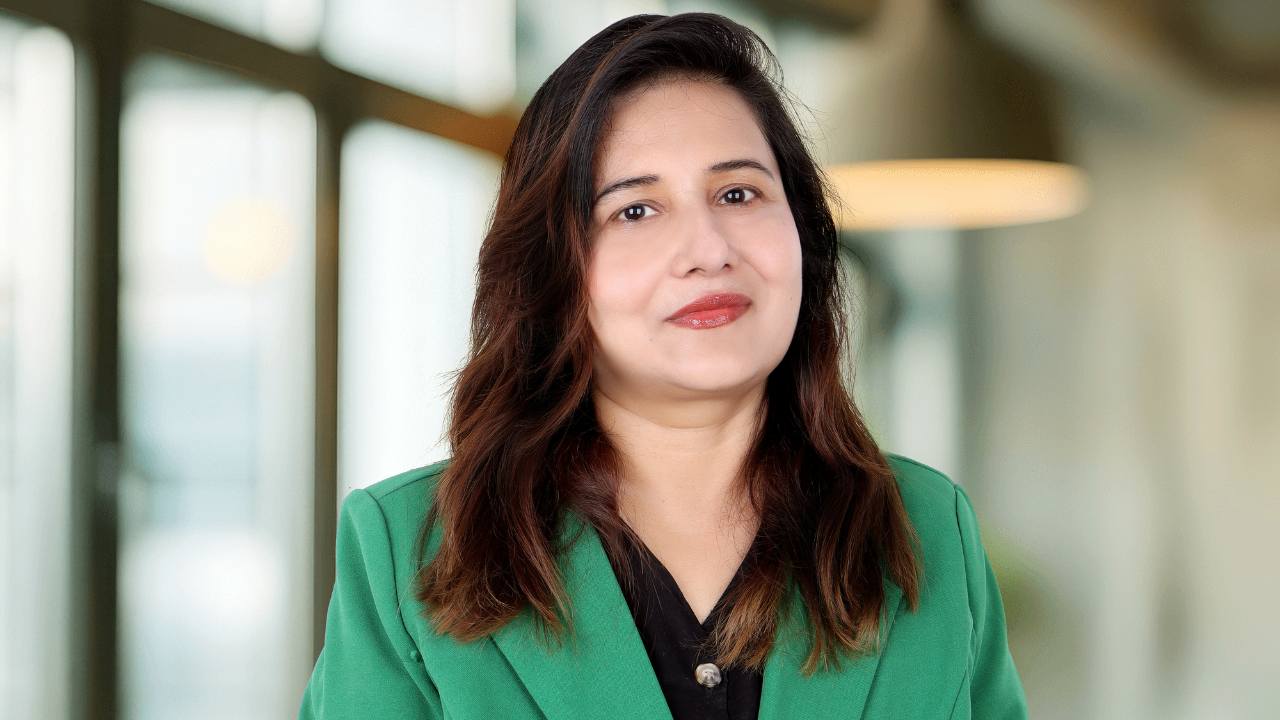

For eighteen years Arindam Paul led a life characterised by stability, intelligence, and corporate prestige. Holding a degree in computer engineering and an MBA, he rose through the ranks of the leading technology companies in India and in Dubai to become a skilled Solution Architect. He designed complicated systems, secured a comfortable income, and realised the conventional middle-class dream.
But underneath this external success there emerged a quiet sense that professional achievement and personal satisfaction had become separated. So, Arindam started to ask himself what would occur if he ceased to evaluate his life solely in terms of career achievements and instead put the limits of human resilience to the test.
In late 2025 he left the corporate boardroom in order to prepare for The Long Haul East, a solo cycling journey of 15,000 kilometres designed to start in Pamplona, Spain, cross Central Asia, and head toward Phuket, Thailand.
A Seed Planted on Two Wheels
Arindam was not a competitive cyclist; although he had already become a keen rock and ice climber and was an advanced scuba diver, long-distance cycling was completely new to him. In fact, the only entry on his cycling record was a 250-kilometre tour of Germany and Austria in 2018.
The actual spark occurred four years later when Arindam was on a mountain trail in Sikkim; there he met a woman who had cycled alone from Beijing to London, and her story remained with him long after the hiking trip was over. Since European adventurers frequently make transcontinental journeys by bicycle, why shouldn’t an Indian do the same?
Moreover, Arindam would not allow the expedition to turn into a mere exercise in self-indulgence. He firmly believed that there had to be social impact when personal boundaries were being pushed. As a result, he used the journey as a means of raising money for an orphanage close to his home town of Kolkata and arranged for a modern computer lab to be financed so that disadvantaged children could get access to digital education.
Battling Skepticism and Physical Setbacks
It was natural for an established career to lead to concern. In a society which places a high value on financial predictability, moving into the unknown caused alarm among friends and extended family. Relatives therefore asked the straightforward question: since you have so little experience of cycling, how are you going to cross continents?
Although he was troubled by his doubts and could not sleep at night, his wife gave him steady encouragement and told him to make a real effort in pursuit of his dream.
In November 2025 Arindam bought his touring bicycle and gave it the name Vayuvat. To learn how to replace the cables, fix the tubes and swap the broken chains he spent many hours at repair shops. However, just as he was gaining momentum, misfortune occurred in December.
A slipped disc that already existed developed into severe sciatica. After being restricted to his hospital bed, Arindam received lumbar steroid injections, underwent traction, and carried out weeks of physiotherapy. His carefully planned training schedule was completely wiped out.
When he carefully got back onto the saddle in February 2026, regional geopolitical tensions disrupted both outdoor training and international flights. As a result, his starting date in April was postponed until May, which left a dangerously narrow time span before his Turkish visa expired on July 31.
Faced with unpreparedness and growing difficulties, Arindam gained a clear idea from a remark made by his wife—that if you are only half prepared but still go ahead you will make great progress—and so he decided to have confidence and go ahead.
Humanity on the Open Road
After he had started on his journey, his anxiety gave way to a sense of momentum. As he travelled through the huge areas of Russia and Kazakhstan, Arindam came across great generosity on the part of total strangers, who regularly provided him with warm food, a place to stay, and sincere encouragement, which showed that true hospitality goes beyond borders and politics.
Each time he felt tired and his determination was being tested, the mission in Kolkata acted as a stabilising influence. The thought of the children who were about to acquire computer skills kept him going, prompting him to continue pedaling over difficult ground and through harsh weather.
Permission to Chase the Dream
What Arindam Paul’s experience shows is that one does not need a perfect resume or years of specialized preparation in order to have extraordinary adventures; growth starts the moment you come to terms with uncertainty and decide all the same to move forward.
For anyone who is on the point of setting out to achieve something bold, Arindam presents a simple truth: you need not produce proof of previous achievements before you are permitted to pursue your dreams. It is sometimes enough just to trust yourself when you are only half prepared to cross continents.