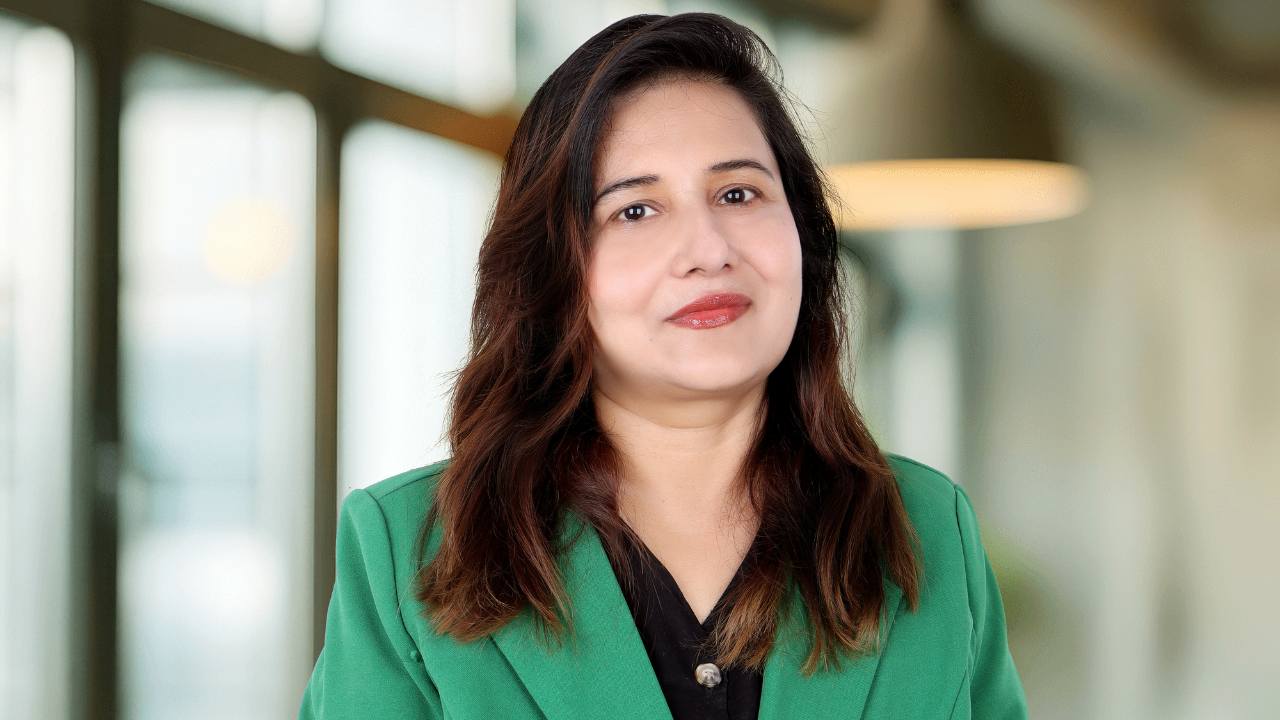

Towards the end of the evening a message appeared on the screen from a complete stranger saying, “I haven’t picked up a paintbrush for seven years, but today, because of your video, I’ve bought one.” Although it wasn’t a kind of statistic that art galleries or social media algorithms care about, it did reveal a quiet and deep truth to a biotechnology undergraduate in Chennai, Pavithra Jayaram, who was at the same time carrying out sterile cellular assays and having her fingers stained with pigment: art is not about displaying mastery; it is about giving someone else the right to start over.
Forging Space in an Analytical World
In 2025, when the journey really got under way, there was no clear plan. Following a rigorous B.Tech course in Biotechnology meant that each day was spent adhering to laboratory procedures and dealing with molecular logic. In this highly structured and analytical environment, a desire for expressive visual storytelling seemed out of place. Since the person had no formal training in the fine arts, no links in the gallery world, and no experienced mentor to point out the difficulties, each technical achievement had to be discovered through a lot of trial, individual determination, and great tenacity.
Far from having the clinical atmosphere undermine its creative aspirations, it instead kindled a strong sense of organization. Since an engineering campus usually does not offer a special place for visual creators, the solution was not to complain about the lack of such a space, but to fill it themselves. By moving forward and setting up the college’s first Arts Club and then becoming its President, everything changed. By leading fellow students, organizing joint projects, and creating an environment in which STEM students could put aside their analytical mindset, an important realization emerged: there is no need to wait for permission or for an open door when you have the determination to set up your own table.
The Crucible of Rejection
The career of an independent artist seldom involves continuous progress. True education had actually come not from moments of applause but from the point at which it was rejected. In the case of a painting which had been carefully executed and had been turned down by a juried exhibition, the criticism went straight to the root of the matter: although the visual finish was polished the conceptual basis was weak.
The first sense of letdown was keen, but it led to an important development. Rather than pulling back, the feedback was examined in detail. Technique was now subordinate to intentionality. The creative routine changed since there were written reflections before the canvases and deliberate conceptual plans.
Despite this, the most difficult struggles were within oneself. Whenever creative momentum slowed down and colleagues focused on the usual corporate milestones, a quiet voice of self-doubt would suggest that it would be much easier to quit. But each low point in one’s creative work had its own balancing force; when one compared personal progress to outside standards and this caused paralysis, resuming the use of the brush became an act of defiance and served to reinforce the idea that lacking a pre-determined plan is what makes exploration possible.
Lighting Fires in Distant Classrooms
It was not the desire for prestige that consistently got rid of self-doubt, but rather the real thing of human connection. When the work moved beyond individual commissions, it discovered its true purpose in the free workshops which it held for children from rural communities who were overlooked.
The sessions were often interrupted by practical difficulties such as poor internet connection and a lack of supplies. But in those fragile moments something transformative took place. The true reward never came on an invoice; it appeared hours after a class had finished, when a parent’s phone would send over a photograph of their child’s drawing. The drawing was usually a simple sketch made with crude strokes and had been produced simply because someone had taken the time to acknowledge their child’s imagination.
What emerged from these exchanges was a long-term objective: to set up an accessible, permanent sanctuary in which young creators from disadvantaged backgrounds could learn continuously without being hindered by geographical or systemic obstacles. It had never been the intention to keep knowledge acquired through hardship to oneself; rather, it was meant to be passed on as a ladder for others to use.
The Canvas That Forgives Everything
The key element of this dual existence is a deep philosophical insight which is passed directly on from the medium. When working on an acrylic canvas, making a mistake is not a disaster; instead, an accidental stroke of colour or an unbalanced horizon is not the destruction of the painting but simply a lower layer that can be covered over, rethought and incorporated into something more valuable than the original design.
The same grace applies to life: even if a proposal is rejected, a workshop is cancelled, or the season is uncertain, the story doesn’t come to an end. You don’t need to have all the milestones planned ahead of time in order to achieve creative fulfilment; all that is required is to be present, to have endurance, and to show undying devotion. An authentic life is not won by desperately seeking validation; it is obtained by loving the craft so much that you never cease choosing it.